Dog Or Wolf: Ice Age Puppy Dogor Holds The Answers
December 24, 2019
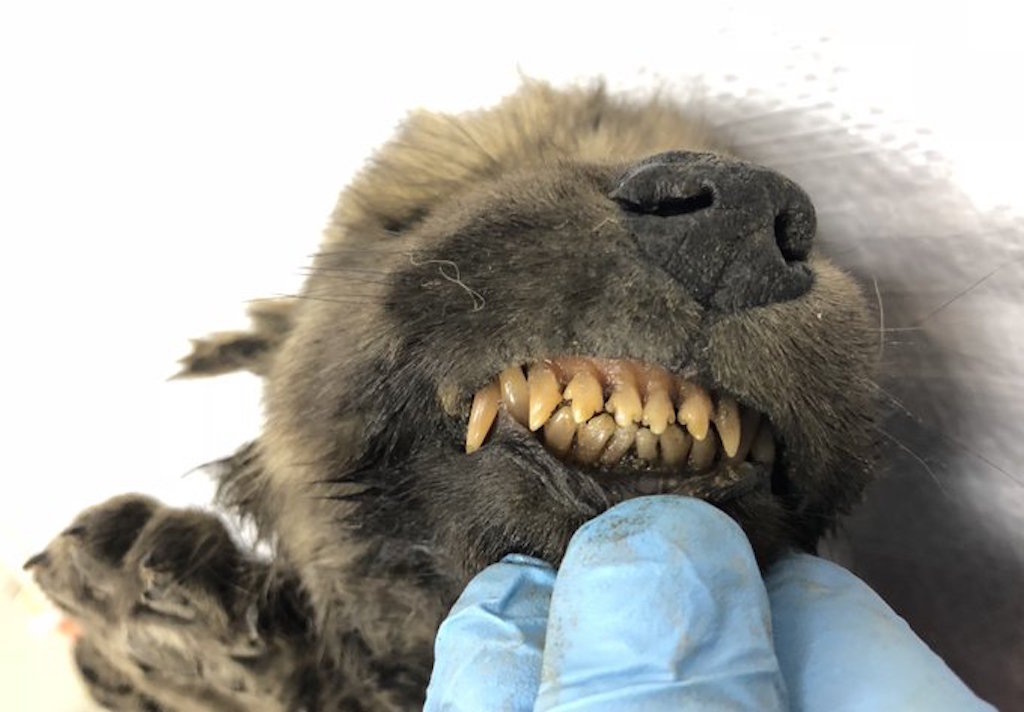
A recent discovery by local tusk hunters last year in the Yakutsk region of Siberia turned out to be a mummified, 2-month old puppy buried deep in a tunnel of permafrost. It is the best specimen found to date and perfectly well-preserved.
Because the puppy, named Dogor after the Yakutsk word for ‘friend’, was preserved in the permafrost for many thousands of years, researchers at the Centre for Paleogenetics in Sweden were able to confirm the age of the puppy from his perfectly preserved teeth, which happened to be his milk teeth. Radiocarbon dating confirmed the age of the pup, two months, and judging from his relaxed stature at time of death, he did not suffer.
Because Dogor existed 18,000 years ago when wolves were making the evolutionary shift from Pleistocene Ice Age wolf to domesticated dog, the scientists believe they have found the missing link. According to the researchers, Dogor could be a very early modern wolf or very early dog or a late Pleistocene wolf. With more testing and DNA analysis they hope to discover just how dogs evolved from wolves.
Another extraordinary feature of Dogor’s state of near-perfect preservation is his fur and the condition of his skin. The fur feels healthy, the whiskers are intact, and the paws and snout possess that puppy-dog cuteness. Despite the damage to the pup’s ribcage and spine, it is an exciting find because of the near-perfect state of the specimen.
Dogor offers up the chance to discover a lineage of wolves that became extinct after giving birth to the first line of domesticated dogs. The paleo geneticists will compare ancient tissue samples of wolves and domesticated dogs with Dogor’s DNA to find the answer to the age-old question: When were dogs first domesticated and how?
Whatever the results, you can expect to find Dogor’s well-preserved body in a museum in the not-too-distant future. This is too good a specimen to keep under wraps.
To stay up to date on Dogor’s progress, you can follow the Centre of Paleogenetics on Twitter @CpgSthlm.