Can Dogs Be Bilingual?
March 24, 2023
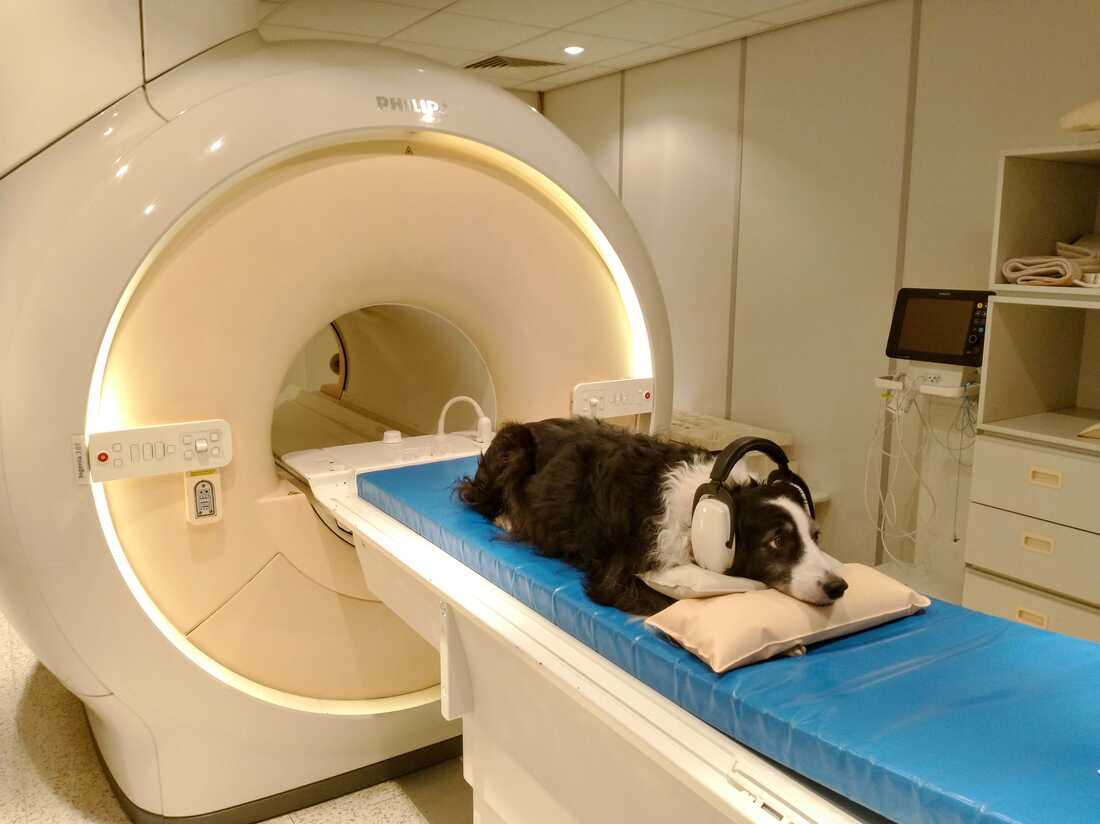
Photo by Dr. Raul Hernandez-Perez, Eötvös Loránd University in Budapest, Hungary
Living in a multicultural city like Toronto, it’s not unusual to find pets who understand two languages. Just like their bilingual owners.
Whether they get their commands and cues in English, French, Spanish or Italian, our pets can understand us.
Whatever language we speak to our pets, science has found proof that dogs, in particular, have the ability to differentiate between two languages. In other words, dogs can be bilingual.
The study entitled, “Speech Naturalness Detection and Language Representation in the Dog Brain,” was published in the scientific journal Neuroimage in March 2022.
Dr. Laura V. Cuaya is the author of the canine study, an ethologist working out of Eötvös Loránd University in Budapest, Hungary. Ethology is the study of animal behaviour.
After moving to Hungary from Mexico, Dr. Cuaya was struck by how her dog Kun-kun would react to a different language in their new home. She said in a press release that before moving to Hungary, she had only spoken Spanish to her dog. So would he notice? Could he tell the difference? Something only humans can do.
"We know people, even preverbal human infants, notice the difference. But maybe dogs do not bother. After all, we never draw our dogs' attention to how a specific language sounds.”
To discover the answer, Dr. Cuaya and her team of researchers designed a brain imaging study. They chose 18 canine test subjects, including Dr. Cuaya’s two border collies - Kun-kun and Odin - and scanned their brains with MRI. The dogs had to be fully trained to lie absolutely still during the MRI before they could begin the test.
The dogs were outfitted with headphones during the brain scan, explained Dr. Cuaya:
"We played them speech excerpts of The Little Prince in Spanish and Hungarian. All dogs had heard only one of the two languages from their owners. So this way, we could compare a highly familiar language to a completely unfamiliar one".
Researchers scanned the language-specific areas of the dogs’ brains, the secondary auditory cortex, for signs of activity during the reading.
"We also played the dogs scrambled versions of these excerpts, which sound completely unnatural, to test whether they detect the difference between speech and non-speech at all," she added.
The brain scans showed positive results. Not only was there distinct brain activity in the secondary auditory cortex with both Spanish and Hungarian, but also in the primary auditory cortex, proving that dogs can hear the differences in spoken languages. The older the dog, the stronger the response in the brain.
Co-author of the study, Dr. Raul Hernandez-Perez said:
"This study shows for the first time that a non-human brain can distinguish between two languages.” He went on to explain, “Each language is characterized by a variety of auditory regularities. Our findings suggest during their lives with humans, dogs pick up on the auditory regularities of the language they are exposed to. Human brains are especially tuned into speech, dog brains may simply detect the naturalness of the sound."
Because the dogs were trained to lie completely still for the MRI machine, their body language was not studied. We now know that their brains understand the difference between familiar and unfamiliar language, but how would they behave if you spoke to them in another tongue? Chances are, they would tilt their head in that quizzical way to better understand you!
Dr. Cuaya is the author of other animal behavioural studies and will be further researching this area of study, so watch this space.