How To Protect Dog Paws From Pavement Burns
August 3, 2018
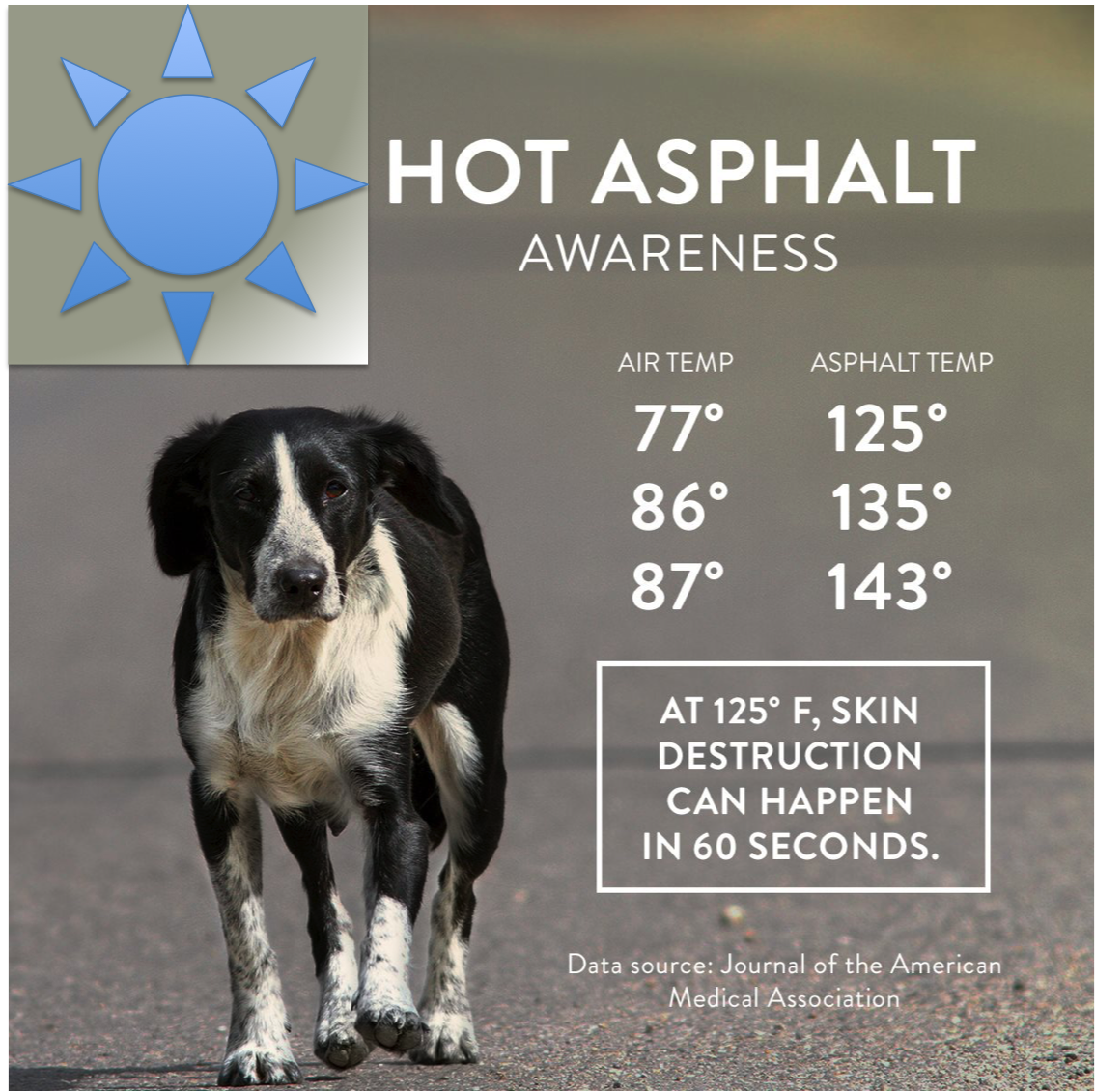
It’s hot and it's only going to get hotter, so listen up! We’ve got some tips for you and your dog to prevent sidewalk burns. Those paw pads can withstand a lot but not when the ground is over 145º in the sun.
Walk when the temperature is cooler
If you live in the city, you’re going to find it challenging in the hot summer to find a cool place to walk your dog safely. One of the best ways to avoid hot pavements is to walk your dogs in the early hours of the morning and after sunset in the evenings. But beware, sidewalks tend to absorb the heat and will take a long time to cool down. Take the temperature test before venturing out to be sure. Place your bare foot on the pavement and hold it there for five seconds or more. If it’s too hot for you, it’s most certainly too hot for your dog.
Cut your walk time in half
If you have no option but to take your dog out in the heat of the day, then head for grassy areas where there are trees and lots of shade. Make sure to keep your walks short and relaxed. Sometimes dogs don’t realize how hot it is outside, especially young ones, and they will romp and roar around like usual. Try to contain them and make sure they take it easy when it’s unbearably hot outside.
Protect your dog’s paws with these products
Just like dogs who wear booties to protect their feet in the winter, so too can they wear summer booties. You can choose from disposable booties, adhesive paw pads or socks. You can also apply some foot balm or paw pad wax before venturing out.
Be especially careful with puppies
If you have puppies at home, be aware that their paw pads are too soft for hard, hot pavement. They need to build up a few calluses before they’re ready for that. Restrict them to the backyard or drive them to the park when they’re old enough.
If your dog does happen to burn his paws, you’ll notice a few changes in his behaviour.
Signs and symptoms of burns to dog pads
- Limping and wincing
- Reluctance to walk
- Red or pink paw pads
- Licking or chewing the feet
- Damage to the skin of the pads
- Blisters
If you see any of these signs or symptoms, take your dog to the vet immediately. They will prescribe antibiotics, pain medication and bandage the feet until they heal. Not something your dog is going to enjoy, so please take some precautions and protect your dog this summer.
by Natalie Secretan
MetroDogWalker.com
Photo source: Journal of American Medical Association