Geckoing Around | Leopard Styles
July 20, 2015
Geckoing Around | Leopard Styles
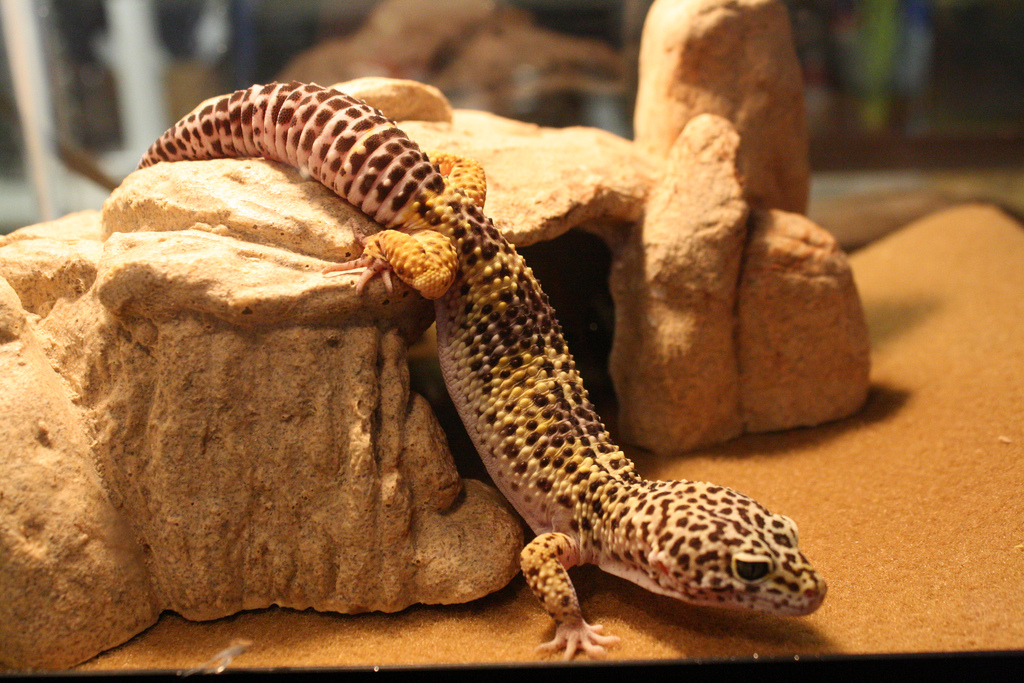
Leopard Geckos are definitely up there with the “koolest” pets out there, so kool in fact that there’s an entire website dedicated to their care and needs; I guess you could say the Leopard Gecko is a bit of a celebrity in the pet world. One of the weirdest things about geckos is that their tails regenerate after falling off. Yes, that’s really weird to some people, so we’ll dedicate the next little bit of this post to talking about that and then move into the juicy details about caring for a gecko.
Gecko Tail Loss and Regeneration
So, okay – above I made it sound a bit alarming, you’re probably imagining some drastic misfortune of these geckos in order for them to have lost their tail in the first place. Stop right there. It’s actually not so bad, they actually “drop” their tails intentionally as a form of defense; it’s actually a survival mechanism!
Geckos will drop their tails if it’s being pulled by a potential predator, from stress or apparently sometimes even for seemingly no reason at all! After their tails have dropped a tail regeneration process begins. Although geckos are designed to deal well with tail loss, there are a couple of things to keep in mind:
- Tail loss still creates a bit of a wound, so you must ensure the environment is clean. It’s best to get rid of the materials in the cage and put paper towels down until the tail has healed.
- Also, keep you gecko away from others, as it may get bullied for having no tail.
Find out more here: Gecko Tail Loss
Caring for your Leopardy Friend
Cage: A 10-20 gallon tank that is at least one foot tall works well for 1-2 geckos. Also, ensure that there is a secure screen covering on the top!
Temperature: You will need to have several options for your gecko to warm itself, including a heat lamp and heat rock, or even an under cage heating plate.
Substrate: Pea gravel, flat stones or artificial turf are good examples of cage floor coverings, and you’ll want to avoid sand or other grainy coverings.
Food: Contrary to popular belief, Leopard Geckos do not eat plants or veggies – you must feed them live insects. You must ensure that the insects diet is properly supplemented with vitamins and minerals hours before your gecko eats.
**If your gecko has problems eating, you can learn how to “assist feed” your gecko here. You can also find additional details about their care and needs.
Happy Geckoing around!
Sources
Author: Aileen Schultz
Photo Credit: Al the Leopard Gecko via photopin (license)