Those Wonderful Whiskers
June 6, 2016
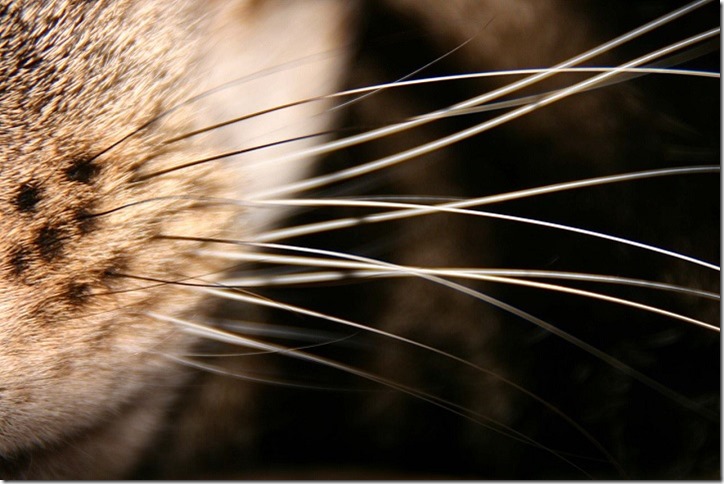
We may take for granted the fact that cats have whiskers. But did you know those wonderful whiskers are so much more than just something that sprouts out the side of our cat’s muzzle?
Read on as we explore how very important those “hairs” are to our feline friends.
It Runs Deep
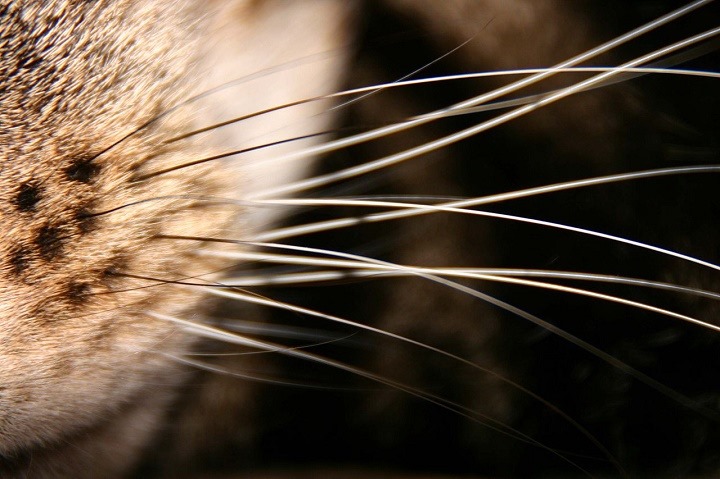
The whisker of a cat is so much more than just a “hair.” This stiff vibrissae is actually deeply embedded into the cat’s skin and connected to the animal’s sensitive nervous and muscular systems. These “Kitty radars” can also be found above the cat’s eyes, on its chin and even on the back of its front legs.
Plenty of Work for a Whisker
Each whisker on a cat contains a sensory organ on the tip called a proprioceptor. This sends tactile messages to the animal’s brain and nervous system. The special positions of each whisker also allow the proprioceptors to tell where each part of the feline’s body is so the cat can make quick decisions for its next move.
The whiskers are also super-sensitive to changes in its environment, they can feel vibrations in the air when it is hunting prey and can even let the cat know if it can fit through certain openings. Perfect for creeping around in the dark.
Moody Whiskers
Did you know you can read a cat’s mood by looking at it whiskers? A content and resting cat’s vibrissae will be mostly immobile, while an excited feline’s whiskers will point almost completely forward. However, if you see your cat’s whiskers plastered tightly to its face and head, this is usually a sign of an angry feline. Back off!
Perfect Balance
Another amazing job those whiskers do is to provide the cat with balance. In addition, all those perfect feats of leaping and jumping could not be achieved without the help of those tactile hairs.
Do Not Cut!
Unlike normal hair on a cat, the whiskers should never be cut or even trimmed. As we learned earlier, the cat’s vibrissae allow this animal to do all sorts of things, when the whiskers are cut it throws off the feline’s equilibrium making it very disorientated and frightened. However, don’t worry if you find the odd stray whisker lying around. These tough hairs naturally shed and will grow back.
More Whisker Facts
- Each cat usually has about 24 whiskers
- The whiskers are divided up by 12 on each side
- These hairs help cats judge distance and space
- Whiskers can turn white with age
- The word whisker dates back to the 1600s. It was originally used to mean to sweep or whisk
- Whisker stress is a real problem for some felines. This is when your cat’s vibrissae touch the edge of the water or food bowls. If you notice your cat pawing at the sides of its bowls, try a wider one.
- Mystacial whiskers are connected to the cat’s muscles, which allows it to move them.
The End of the Whisker
Now that we’ve uncovered the mystery of the whisker, you may be able to more fully appreciate those bristly hairs. Observe your feline friend to see how it uses its whiskers on a daily basis.