Why Do Cats Have Whiskers?
July 27, 2018
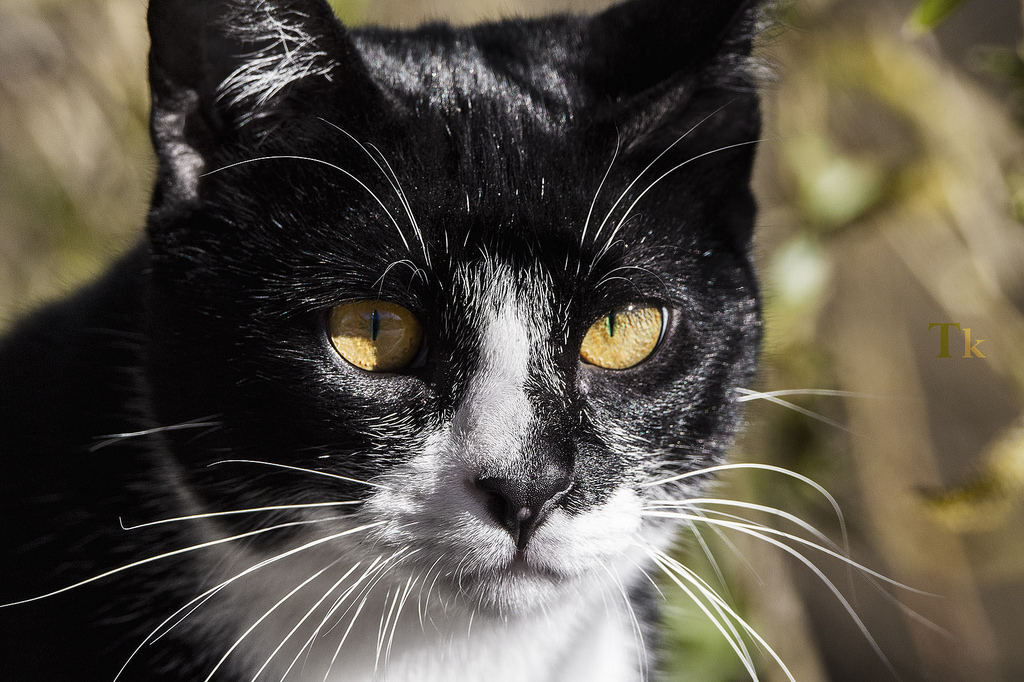
A cat’s whiskers are fascinating to behold. They add character to a bland face and comedy to a young face, but looks have nothing to do with why a cat has whiskers in the first place.
How many whiskers does a cat have?
While you may be right in thinking a cat needs her whiskers to get around, you’d be just scratching the surface! If you look closely, you’ll see that your cat’s whiskers aren’t just on his or her mouth. Whiskers appear above the eyes, at the side of the face, under their chin, sometimes on their ears, and even along the back of the forelegs. There are about 24 whiskers around their mouth, 12 on each side.
Whiskers act as sensory receptors for your cat
Whiskers play a vital role in a cat’s safety by helping them interpret their surroundings. Known as vibrissae, whiskers are large, thick hairs or proprioceptors that grow deep within the tissue sending messages via the follicle to the muscular and nervous systems. Essentially, they are guidance, tracking and radar systems. Though those big, beautiful cats eyes are good at seeing distant objects, up close those eyes are not much good at all. Their whiskers, therefore, act as a second set of eyes, allowing them to home in on their prey with exact precision.
Whiskers are so sensitive they can alert a cat to the size, location, and texture of any object they brush up against. Whiskers help animals see in the dark and are very sensitive to vibrations and changes in wind direction, all of which are good for sensing danger and the presence of predators. Whiskers help a cat gauge distance and space, helping them land gracefully every time on their desired object.
Whiskers express mood
Whiskers can tell you a lot about your cat's mood. Straight out to the side and relaxed is sign of a contented cat. Whiskers that contract and pull back are a sign your cat is frightened or wary of something, like an intruder. When your cat is in a playful mood, ready to pounce on his favourite catnip mouse, his whiskers will bunch together and point forward.
Never cut off a cat's whiskers
Cutting off a cat’s whiskers is a very terrifying thing for your pet. Without the ability to sense their environment, they will become very frightened and withdrawn, even depressed. While they will grow back over time, whiskers should be left alone.
Are cats' whiskers lucky?
Your cat will occasionally shed their whiskers and if you happen to find one, make sure you keep it, as it is believed to bring good luck.
Photo by: Tate Kieto ~ Gato avizor