Dog Sociology
July 3, 2016
Sander, a sociology professor researched dogs over a decade, although not in the typical sense. However, he has observed at how different people interact and relate to with dogs from the viewpoint of sociology.
Sander says, "It’s an important element of our life to live with our favourite pets, some people take their pet as a pet and most of the people take them as a part of family. Research done by me consider this and view it with some different angle. It codify the feeling of people in relation to their pets,"
Later in 1999, he compiles his research in a form of book named “Understanding dogs” which was a hit.
Studying the dog’s ancestor wolf is the best strategy to know about dog sociology. A dog's normal behaviour is deep-rooted in a pack social constitution. Once you get well aware of the working of this pack social constitution works, you can know your dog as an entity.
This pack is a hierarchy of dog in which every dog has a defined position. Every pet dog will consider his master, master’s family and any other pets at home as member of his pack and will consider each individual as having a defined position in the pack order. In a pack of wolf, the dominant female and male, Alpha pair, or leads the hierarchy. Other females and males will be beneath the Alpha pair, with cubs and little wolves at the bottom. Every wolf is obedient to the Alpha pair and to those wolves positioned in above level.
This multifarious social formation results in powerful bonding and an intellect of family linking the members. A wolf taken out from his pack, no matter in any position undergoes a certain state well known as "separation anxiety." Domestic pet dogs, in a pack of animals, can also undergo a similar state when their master sell them to someone else or leave them. This anxiety known as separate anxiety repeatedly leads to negative distractive behaviour, for example habitual barking and inappropriate chewing.
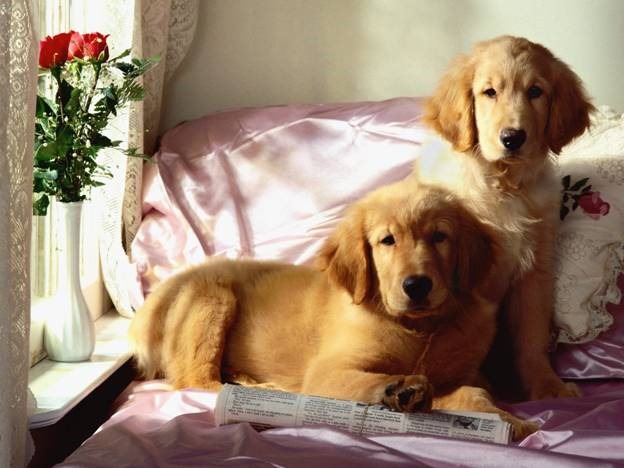
When someone buys a baby puppy and take him in his new home, you take place of his littermates and mother. Your family and you (as well as other pets in home) turn out to be his new pack. Whereas if you do not make him considering you in the position of the alpha from the very start, your puppy will raise up into a dog that will continually challenge your leading position. This leadership is not maintained through aggression or cruelty but in a form of affection and trust. Just like an Alpha wolf that treats his babies with firm, but steady leadership, you should be kind to your puppy with but leading alpha. The puppy bought must be taught that all other household human most definitely children, are also in a leading position.
In the wild life, there is a continuous struggle for leadership within every pack. When the animal under dominance fruitfully challenges leading animal and get successful, the dog under dominance takes the position of alpha. A dog will certainly challenge members of your family and you. You have to be ready to practice your control.
References
· http://advance.uconn.edu/1999/991101/11019911.htm
· http://www.dog.com/dog-articles/dog-sociology/1797/