How To Get Leash Reactivity Under Control
May 18, 2017
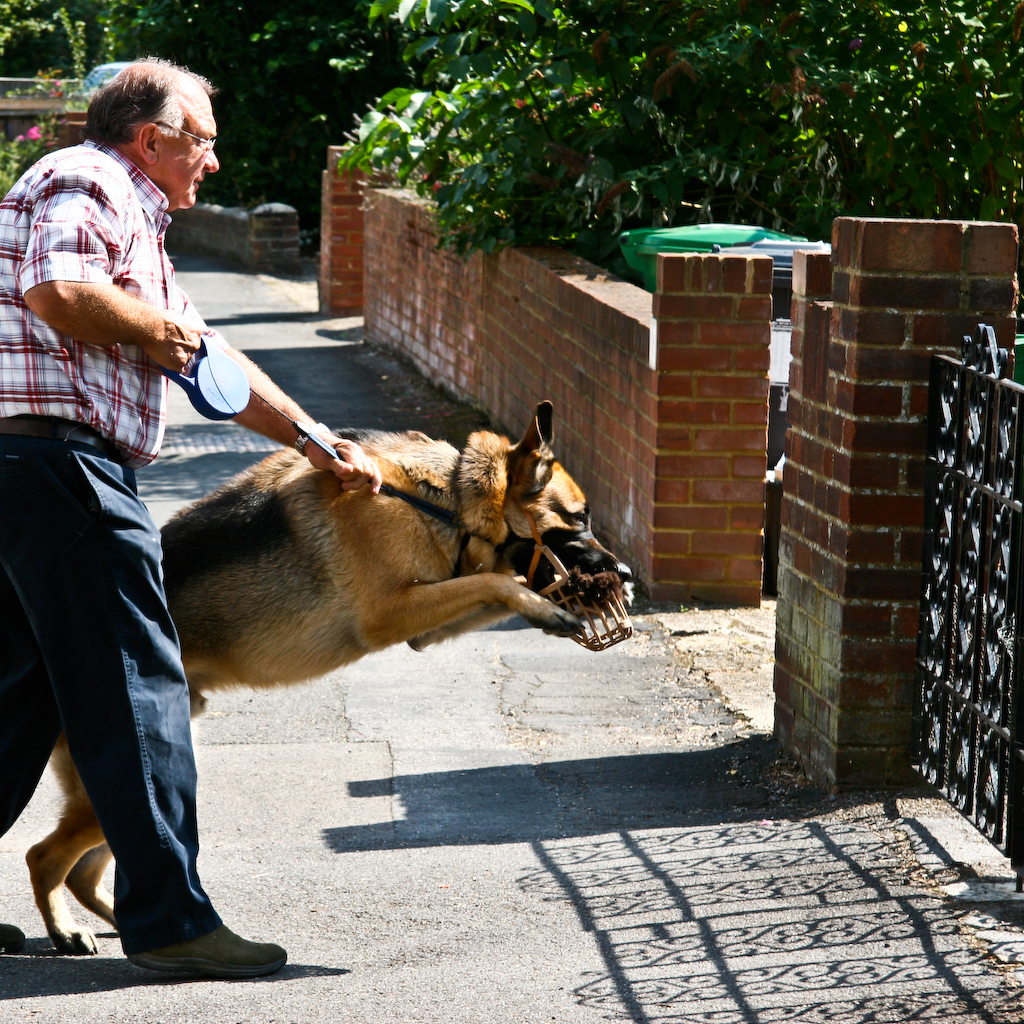
Does your dog bark and lunge at other dogs when he’s on leash? This is a reactive behaviour known as leash aggression or leash reactivity and it’s very common.
Like any behavior, good or bad, it takes time to learn it and it’ll take time to unlearn it. Here are a few steps to get your dog’s reactive behaviour under control.
Obedience Training Every Day
1. Brush up on your obedience training. If you want your dog to listen to you, you need to teach him some basic commands like sit, leave it, and watch me. Practice these commands every day and reward your dog with treats each time he or she gets it right. Then you’re ready for the next step.
Don’t give up. It took me more than a year of training my hound puppy until she was ready to walk nicely on the leash with no aggression. Her leash reactivity was off the charts, so I practiced her obedience commands every day and worked on walking her on leash, while encountering other dogs. Eventually it paid off.
Day by day, she started to calm down and her aggression got less and less, until one day, it just stopped. Working with her every day seemed like forever and at times, I didn’t think she was ever going to get over her leash reactivity. But now, I know it was worth all the effort. Now I enjoy walking her and look forward to our walks together. So don’t be reluctant to put in the time and effort into your dog. It’ll make both your lives happier in the end.
Watch Your Dog's Behaviour
2. After obedience training comes getting to know your dog’s behavior. What’s the first sign of leash reactivity? If you can catch it before it escalates out of control, then you have a better chance of managing your dog’s leash aggression and modifying his behaviour.
Some signs to watch out for are hyper-ventilating or low growling, followed by being super-focused on the target. From there your dog will raise its hackles, straighten its tail and crouch down with ears tall. At that stage, you know there’s going to be a full-scale blow out, so the trick is to recognize your dog’s body language before he reaches the reactivity threshold.
Create Distance from the Trigger
3. At the first sign of trouble, turn around and start walking in the opposite direction, making sure you remain as calm as you can. You don’t want your dog to pick up on your anxiety.
The trick is to create enough distance between your dog and the other dog so you can avoid an incident. It’s also how you teach your dog a different set of behaviors and how not to react in this situation.
Next, engage your dog’s attention with the promise of a treat, as you run through your obedience training: sit, watch me, leave it. Repeat the commands until the other dog has safely walked on by.
Desensitize the Situation
4. To reinforce this new behaviour, you want to desensitize your dog’s reaction to the situation by using some counter-conditioning techniques.
Get the Right Collar for Walking
5. Using a different collar for walking your dog will also greatly help you control his leash aggression. Regular collars don’t give you enough control, so opt for a head halter or a no-pull harness instead. With a head halter you can control your dog’s head and easily pull him away from his intended target. A no-pull harness will also help to deter his leaping and lunging better than a regular collar.
Consider a Muzzle
6. If your dog’s aggression is particularly bad, you might want to use a basket muzzle to save anyone or another dog from getting bit.
Stay Calm and Carry On
7. Above all, make sure you remain calm and try not to tense up. Your dog is very attuned to your body language and any anxiety or stress on your part will alert him to something wrong.
Try to avoid tightening up the leash, as this will trigger your dog to react aggressively. Instead, teach him that once he sits and behaves himself, you’ll loosen up on the leash.
It will probably take you some time before you’re completely comfortable in this situation, but the more calm you can be, the more your dog will relax. Start with your tone of voice, relax your shoulders and focus on your breathing. Your dog will know immediately from your body language if he’s to step up and fend off the approaching dog. Just remember, when you do see another dog, instead of getting stressed out about it, turn away before you get too close and practice your obedience training.
Photo Credit: Simon Whitaker - When Alsatians Collide