Ticked Off! Twelve Tips for Tick Control
April 26, 2016

by Natalie Secretan
Lyme Disease and Ticks
Lyme disease caused by blacklegged ticks has been plaguing dogs and humans since the 1970s, and the problem isn’t going to go away anytime soon. Tick larvae can latch onto mice and even birds, in search of their first sup of blood. It is believed that by hitching a ride on the backs of birds, ticks are expanding their domain and increasing infected areas. So what can you do?
You could say that ticks are a bit like arachnid vampires, looking for their next blood meal and spreading disease wherever they go. Here are a few tips on avoiding ticks.
Preventative Measures to Combat Ticks
- Immunize against ticks
- Avoid long grass and wooded areas
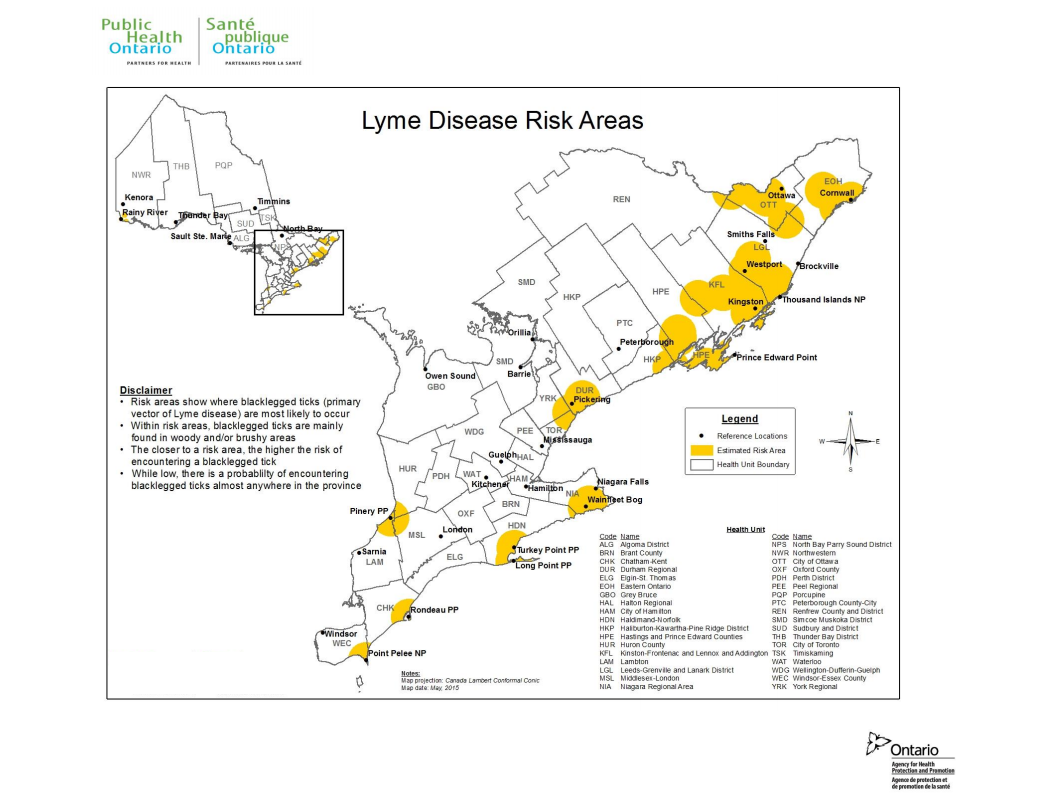
- Avoid high-risk areas (see the map below)
- Wear long pants and long socks
- Wear light clothing so ticks can be clearly visible
- Spray clothing with Permethrin before walking in parks and woods
- Outfit your dog in protective clothing and booties (also doused with Permethrin)
- The number one herbal alternative is rose geranium oil (not recommended for cats and not to be applied directly to the skin)
- Other herbal alternatives include lavender and lemon oil
- Buy a tick comb and diligently practice tick removal after your walk
- Carry a pair of tweezers with you, just in case you need to remove a tick
- Carry some anti-bacterial wipes to sterilize the bite
TICK MAP OF ONTARIO
How to Correctly Remove a Tick
If you or your dog is unfortunate enough to get bitten by a tick, don’t panic. A little patience and a strong stomach are needed to safely remove the tick. An infected tick is full of the harmful bacteria Borrelia burgdorferi that causes Lyme disease. One false move and you’ll end up squeezing that toxic chemical into your body. Here are some tips:
- Buy a pair of plastic tweezers with rubber ends
- Do not grab the tick by the body
- Gently but firmly grip the tick by the ‘nose’ and pull out of your skin
- Keep the specimen in a jar and take it to your doctor
- You can also take it directly to the nearest Toronto Public Health office (see list below).
Report All Cases of Tick Bites to Toronto Public Health
44 Victoria Street, 18th Floor 175 Memorial Park Avenue
Phone number: 416-392-7685 Phone number: 416-392-0936
1530 Markham Road, 5th Floor 5100 Yonge Street, 2nd Floor
Phone number: 416-338-7431 Phone number: 416-338-8410
399 The West Mall, 4th Floor
Phone number: 416-338-1507
The good news is that not all ticks carry the bacteria Borrelia burgdorferi that causes lime disease. But to be safe, it’s always a good idea to take any tick specimens you find to Toronto Public Health for identification and further testing. You can also find more information on the City of Toronto’s website.
With the weather warming up, ticks will be starting to stir after a long winter and looking for their first blood meal. So bundle up, vaccinate your pets, and practice the tips we’ve recommended in this article.
SOURCES
http://www.beachmetro.com/2016/01/28/ticks-problem-for-pets-people/
http://www.tickencounter.org/prevention/permethrin
http://canlyme.com/
http://www.petmd.com/dog/wellness/evr_multi_flea_control
Photo credit: Westies in tall grass by Joe Thomissen