Should You Hug Your Dog?
May 19, 2016
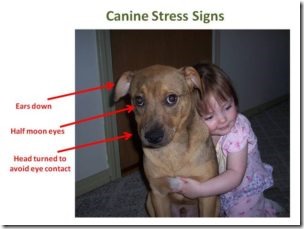
Many of us think of hugging others and our pets as an extremely affectionate sign. However, have you ever wondered exactly how your dog feels when you hug it? Have you ever thought about what thoughts your dog might experience when your child hugs your dog? Often, we humans simply assume that our dogs interpret our signs of love and affection the same way we do—but this notion may not be the case for all of our actions towards our pets.
Dog Comfort Levels
Dogs, as animals, hold a long record for living with us in peace, love, and tranquility as our best and most reliable friends. They do show unconditional love and adoration for their masters. But they are, in fact, a different species with different communication factors, and the recent scientific news suggests they may not be as comfortable with hugs as we think. If this fact is news to you, please read on to learn more about just how your dog feels when you and your children hug onto it.
Dogs as Cursorial Animals
First of all, dogs fit a class of mammals known as cursorial animals, which is not a unique thing among mammals. Being a cursorial animal means your dog is one of the many types of animals that possess a natural drive to run from danger when it feels threatened. So how might this fact affect how they feel when either our children or us owners hug them?
When you hug your dog, your dog instantly feels trapped and like he or she cannot run from the danger that could be ahead. An affectionate hug offsets their natural comfort level and need to be able to get away from things when they are afraid of something. And sometimes, a happy, loving dog might be so stressed out from a hug, he or she might bite to regain a certain comfort level. Furthermore, however close either your face or your child’s face is to your dog’s mouth during the hug can make the possibility of being bitten even greater.
Doggie Stress Factors
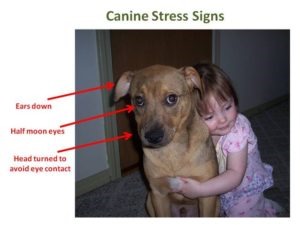
As the picture demonstrates, signs of stress in dogs include lower ears or downward ears, teeth baring (even slightly), eye closure (full or partial), lip licking, and a lack of eye contact with the owner. One scientist, Dr. Coren, curious about this theory, went through over two hundred randomly selected snapshots of children hugging dogs while he looked closely at the dogs for signs of emotional strain.
According to Coren, the vast majority of dogs showed at least one, if not more, a sign of stress—over 81% of them, in fact. The dogs that were totally comfortable with being hugged were in the minority, at not quite eight percent.
Take the Time to Understand Your Dog
What Coren also suggests is that people so often hug their dogs, they may be completely unable to interpret their longtime pets’ signs of stress and anxiety, which can be troubling, and which can result in other anxious or unwanted pet behaviors, including biting.
So, what can you do? Take the time to learn a bit about your dog’s body language and signs of dog discomfort, most of all. This approach is even more important than cutting back on the hugs because a pet owner that takes the time to understand his or her dog will have a happier, healthier, more well-behaved pet—and what dog owner doesn’t want that for his or her beloved dog?