Do Cats Form Loving Attachments To Their Owners?
December 25, 2022
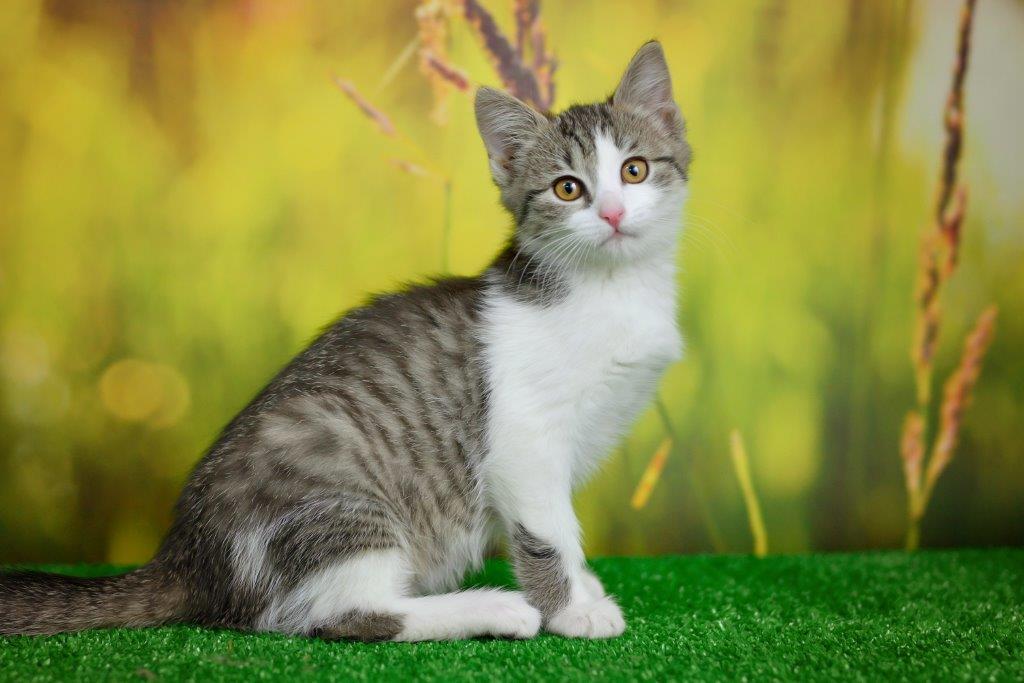
Some cats are more affectionate than others and some cats are more aloof and some cats are both, depending on their mood. But that doesn’t mean they love you less.
Even though dogs are more adept at picking up on human behaviours and mimicking their pet parents to show love and affection. Cats also have their own set of language to tell their pet parents how much they love them.
In a 2019 study out of Oregon State University, published in Current Biology, scientists examined cats’ behaviour towards their pet parents to determine if attachment bonds between domestic cats and humans really exist.
The researchers tested their theory on 70 kitten subjects (and 70 kitten owners). Using similar attachment tests as performed on babies, pet parents and cats were left alone in a room for two minutes, then left alone for two minutes before being reunited. Comparing their findings to studies completed on attachment styles in babies and dogs, the researchers observed the cats’ towards their pet parents after this short absence. They were looking for signs of security, ambivalence, avoidance and disorganized behaviour.
- A secure attachment style relates to how distressed the kitten was at their owner’s departure and if they returned to a happy, trusting state upon their return.
- An insecure attachment style relates to a heightened state of distress upon the caregiver’s return and a mix of disorganized behaviour, including avoidance and over-excitement and the constant need for touch.
Findings of the study showed the same ratio of secure and insecure attachment styles between cats and human children:
- More than 60% of the kittens exhibited a secure attachment style
- About 30% of the kittens exhibited an insecure attachment style
The study concluded that cats are not the cold, aloof, complacent creatures that some people think. They are quite capable of displaying the same attachment styles as shown between humans and their babies (and dogs):
“Overall, indicators of attachment relationships between cats and humans, including proximity seeking, separation distress and reunion behaviour, were present, and individual differences in response were consistent with attachment style categorizations as previously described in the literature.” (Attachment bonds between domestic cats and humans, 2019)
The study went on to say that the evidence proves the existence of social flexibility in cats and their ability to form cross-species attachments. Perhaps, like dogs, cats are also social generalists, adapting to their environment and attaching to their humans as offspring caretakers as a sign of true love.
When cats recognize the cues their pet parents give them, they can translate that into their own language, showing love in their own way.
Cat owners will recognize these love signals:
Squinty eyes or slowly blinking at you is a sign your cat is completely at ease.
Purring indicates a feeling of closeness to their caregivers and a sign of contentment.
Snuggling up to you and making body contact is a true sign of trust and bonding.
Face rubs and head butts are very much like a fist bump to show companionship. It’s also a way of marking you as your cat’s happy owner.
Ultimately, the research is a study of social cognition between cats and their caregivers in what animal behavioural scientists would call, an anthropogenic environment.