Oh, the Life of a Turtle | Turtles as Pets
May 3, 2015
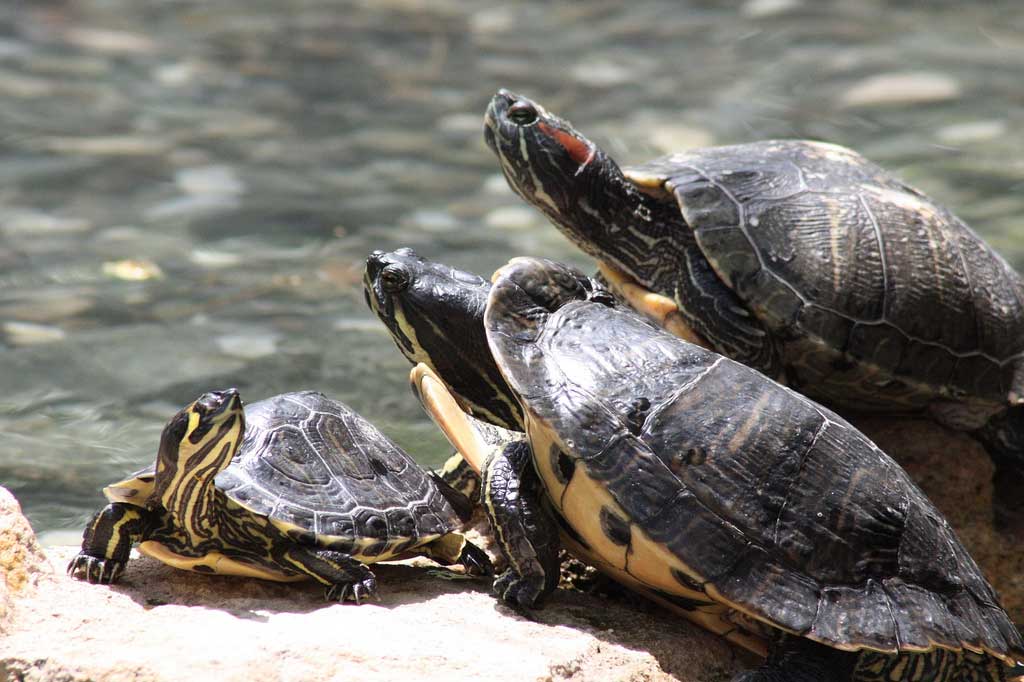
Oh, the Life of a Turtle | Turtles as Pets
Okay, first and foremost let’s help the turtle out by clarifying something that people are often confused about – the difference between a turtle and a tortoise. The confusion is of course perfectly understandable; after all they do have a lot in common!
The Turtle vs. the Tortoise
Family: The turtle and the tortoise are both from the family testudines (yes, we think it’s an odd name too), but are members of different classifications within that family.
Living: The turtle is a creature of the water, whereas the tortoise is predominantly a land dweller.
Shells: They both have that ever-indicative shell, formally called the carapace, with the lower portion called the plastron. For both of these creatures, these shells are attached to their bodies and while their heads and limbs poke in and out of the shell, they cannot actually crawl out of their shell! Also, the tortoise tends to have a large dome like shell, whereas the turtle’s shell is usually flat and streamlined.
Birth: This is probably where they differ the most. The tortoise moves from a nest to their mothers burrow whereas turtles stay in their nests for 90-120 days. Also, turtles only live 20-40 years on average, whereas tortoises live from 80-150; the longest known living tortoise is 326 years old!
Common Turtle Pet Species
Ah, now that the confusion is sorted out, let’s move on to having the turtle as a pet. Generally speaking, turtles are good pets for children over 12yrs, with parental supervision. There are several common species of turtles that people often like to have as pets:
Central American Wood Turtle (a.k.a Ornate Turtle): semi-aquatic, needing a lot of dry land to bask in.
African Aquatic Side-Neck Turtle: primarily aquatic with a need for some basking area.
Painted Turtle: semi-aquatic, needing some dry land for basking.
Caspian Pond Turtle: semi-aquatic, needing some dry land for basking.
Red-ear Slider Turtle: semi-aquatic, needing some dry land for basking. The red-ear slider turtle is actually the most popular pet in the world!
Caring for a Turtle
In general, turtles are pretty straightforward creatures, but there are some basic parameters that should always be followed.
Tank/Habitat: the tank should have a water area that is 4-5 times longer and 3-4 times wider than the turtle, and at least 1.5 times deeper than the turtles length. Of course, the more turtles you have the more water space you need.
Lighting: your little turtle will need UV lighting to help maintain its shell/bone health and body temperatures.
Heating: turtles are “cold-blooded” and thus need to have some heated surface to bask on.
Basking: unless a turtle is completed aquatic (which most pet breeds are not) then you must ensure that you have areas for your turtle to hang out, outside of the water. For some turtle this needs to be an essentially dry area, and heated areas are a must as well.
For more detailed information about the care of a water turtle, you can visit the petsmart website.
We hope you enjoy your new pet turtle! We’d love to hear about your turtle stories and if you have any, feel free to post them below in the comments section.
Author: Aileen Schultz