What Is Limber Tail Syndrome?
October 5, 2015 · Updated September 1, 2026
by Natalie Secretan
Sometimes called cold tail, limp tail, rudder tail, broken tail or dead tail, Limber Tail Syndrome is more common in hunting dogs like pointers, retrievers and beagles, but any dog with an undocked tail can be affected. The reassuring news is that true limber tail is usually a temporary muscle strain that settles with rest. The catch is that a suddenly droopy tail can also be a sign of something more serious – which is why the first call should always be to your veterinarian.
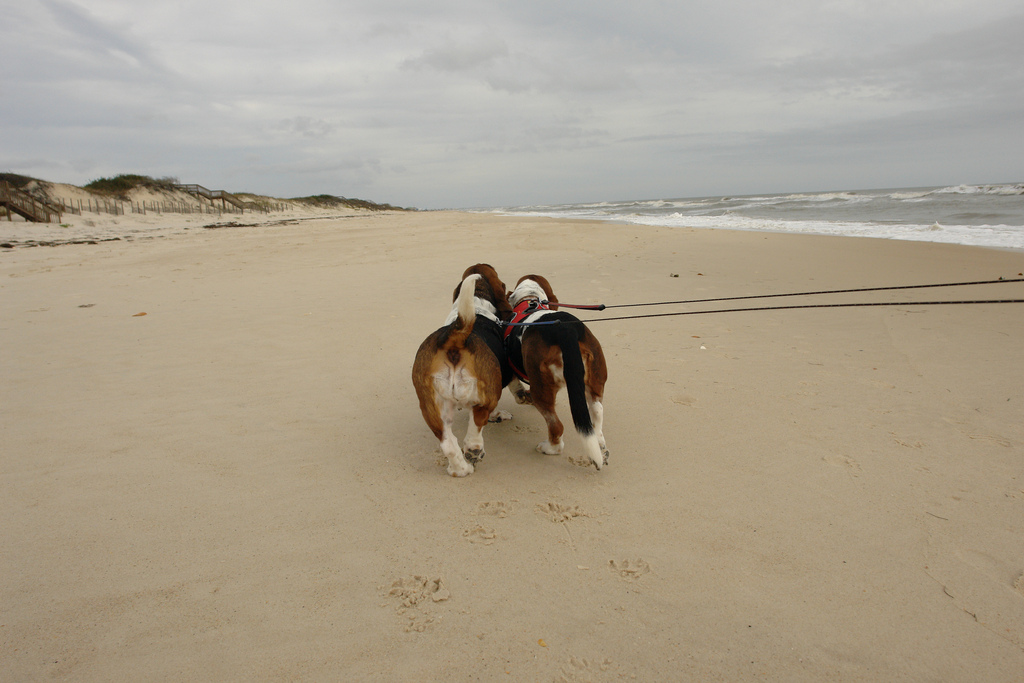
Limber Tail Syndrome is something I hadn’t heard of until my hound Layla’s very springy tail suddenly lost its zest for life. It happened a short while after her spaying surgery. After the two weeks of recommended rest, we returned to the dog park with as much vim and vigour as before we had left. Layla had two weeks of pent-up energy to run off and she wasn’t wasting any time.
It wasn’t until the following morning that I noticed the spring had gone out of her tail. It hung at a weird angle – straight out at a right angle and then drooping down, as if someone had bent it in two. After a little research, I discovered this matched the classic picture of limber tail – an inflammation or strain of the muscles at the base of the tail caused by over-exertion (and sometimes by swimming in frigid water, hence the name cold tail). Kind of like when you return to the gym after several months away and can barely move the next day because your muscles are so sore.
The good news is that limber tail itself is generally not serious. With a few days to a couple of weeks of rest, most dogs are holding their tails up high once again, and many only ever experience it once in their lifetimes. Getting it once doesn’t mean your dog will keep suffering from it.
Here’s the important part, though: as an owner, you can’t reliably tell limber tail apart from the things that mimic it. A fractured tail, an injury to the lower spine, an infected or impacted anal gland, and even prostate problems can all make a tail hang limp and painful in much the same way – and those conditions need real treatment, not just rest. Your dog’s tail is an indicator of their health and mood, so a droopy tail is always worth taking seriously. A veterinary exam is the only way to know for sure what you’re dealing with, and if it does turn out to be limber tail, you’ll go home with peace of mind and a simple rest plan.
Treatment for confirmed limber tail is refreshingly low-key: rest is the mainstay, and your vet may prescribe an anti-inflammatory to keep your dog comfortable while the muscles heal. Never give human pain medications on your own – several common ones are toxic to dogs – and always ask your veterinarian before giving any medication.
So if you’ve signed up your couch potato dog for a weekend of adventure chasing rabbits in the countryside, or you think your retriever will enjoy a polar bear dip as much as you do, think again! Build up activity gradually and keep icy swims short. If the tail droops anyway, a call to your vet is never wasted. And remember – never grab your dog by the tail.