When Is Puppy Rough Play Not Okay?
November 4, 2017
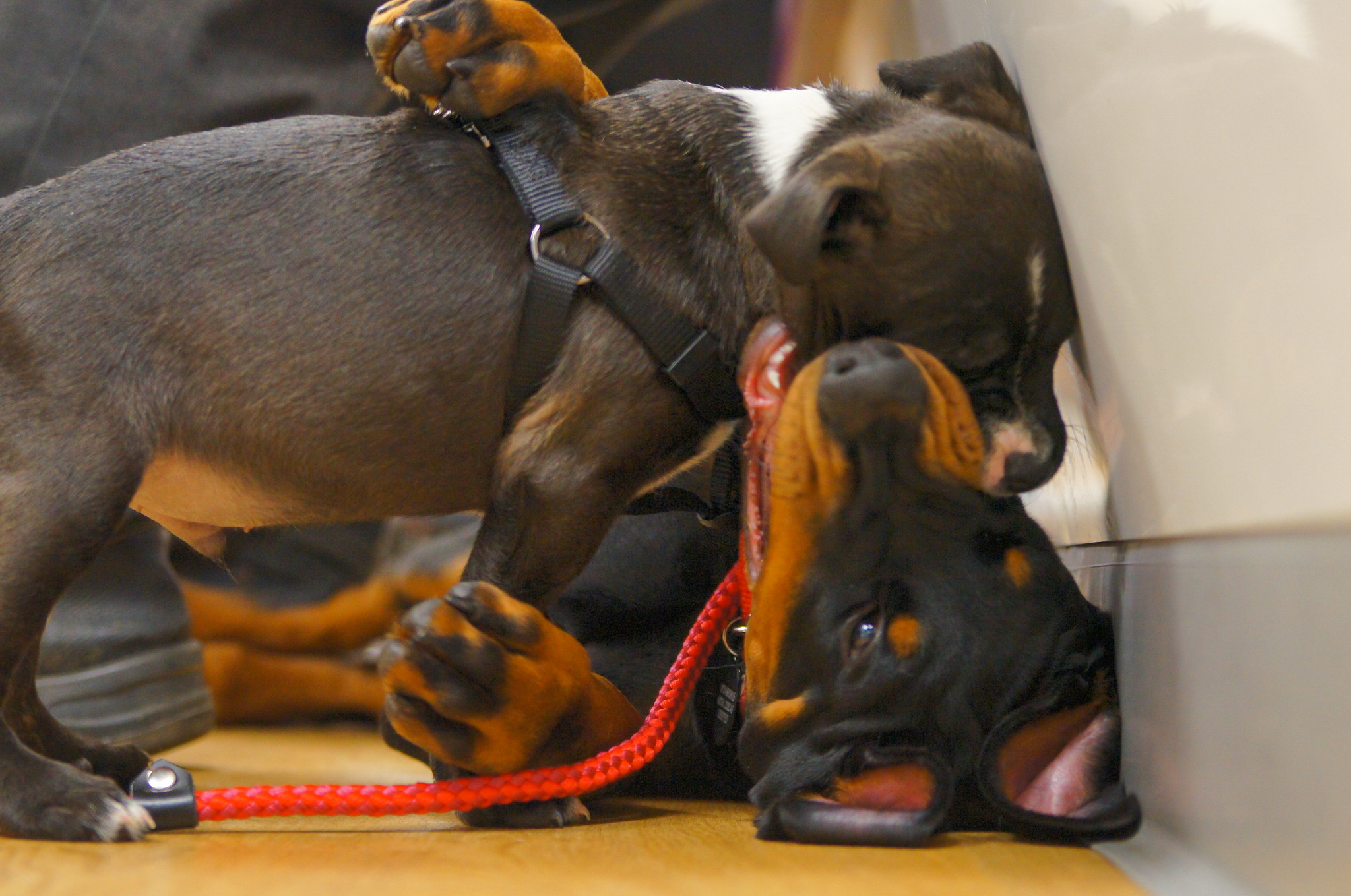
For a young dog, every day is a learning experience of how to behave, how to push the limits, and how to get our attention. As your dog’s caregiver, it’s your job to guide your dog through this time and teach him or her about acceptable behaviour and boundaries. The problem is, most people have a different opinion of acceptable dog behaviour, and this is never more evident than at the dog park.
The other day at the off-leash park, there was a puppy Doberman about 7 months old playing with another older dog when things got a bit out of hand. The older dog had tired of junior’s youthful advances and wanted nothing more than to rest for a while. But the Doberman puppy kept persisting, jumping in with nose bumps, barking and circling, trying to get the old man to play. Nobody did anything to stop the play, so it escalated. Junior’s nose bumps turned into nips and bites, his barking got louder and more frequent, and his movements more quick and jerky. The older dog started snapping back in defense and then Junior went in for a proper neck bite. Yipe!
This was when the owners stepped in and had a difference of opinion over what is considered fair play. The scenario is not much different from two parents arguing over their kids’ fighting at school. Of course, you’re going to defend your own child, but in the long run certain behaviours need to be addressed and the sooner the better.
The same is true for dogs.
A puppy starts to learn to play fight with his littermates as young as three weeks old. Depending on how they are raised from birth, by the time you bring your new puppy home at 10 weeks or so, they may have picked up a few bad habits like nipping or biting too hard. So it’s your job to teach them their boundaries by showing them the difference between soft bites and hard bites.
From other dogs they’ll learn how to play and socialize, so it’s important to address any behaviour that seems out of line. It’s especially important when you have a breed that will soon outgrow you in strength and power to teach them what’s acceptable.
When Is Rough Play Not Okay?
When you’re in a dog park, there really is no way of knowing if another dog is going to be well-behaved or not. But there are signs to watch out for that tell you when it’s time to step in and let your dog take a time out.
When dogs initiate play, it usually begins with the down-dog bow, followed often by a few short barks. If the other dog is up for playing, then he will engage with a similar show of bowing. What happens next is really up to the breed of the dog. Some dogs like to chase, some like to wrestle, others like to be chased. But in each case, here are some behaviours to watch out for:
- Barking non-stop - excessive barking can be aggressive and upsetting for other dogs (and people), but playful yips are perfectly acceptable.
- Nose touching is okay but biting is not. Dogs will jump in and make contact with their noses, but when they start showing their teeth, it’s time to stop.
- Mounting is a sign of dominance and can so easily lead to aggression.
- Chasing that ends in real aggression or biting is not a good thing.
- Neck over the haunches is another sign of dominance and can lead to neck biting or rumbling.
- Side of the neck biting and pinning to the ground is probably one of the most aggressive moves. When it’s playful and the dogs take turns at playing submissive and dominant roles, then it’s above board. But when the dog on the bottom is clearly in distress, it’s time to stop.
When a dog starts baring their teeth and the hair goes up at the back of their necks, that’s usually a sign that trouble is on its way. While it’s advised to stop aggressive behaviour in dogs, it’s important to be safe and try not to get bitten yourself. Training your dog from an early age and teaching him consistent command words will help keep your dog safe and well-behaved.
by Natalie Secretan
PuppyDogCapers.com
Photo credit: Stuart Black ~ Subduing Ajax