Which Collar Is Best For My Dog?
November 29, 2022
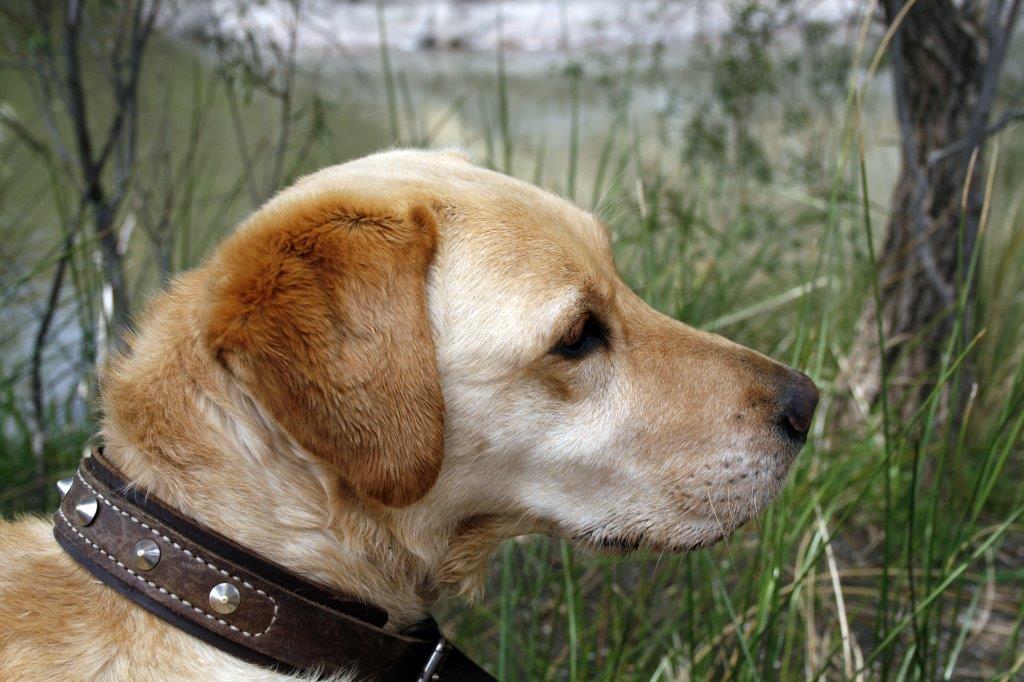
With such a wide selection of dog collars available online and at your local pet shop, it’s tough to know which one to buy. Which one is better for your dog?
Dog collars are designed for a specific purpose, such as a tactical collar for a service dog or a lurcher collar for a greyhound. Let’s take a look at some of the types of collars you can find at your neighbourhood pet store.
Types of Dog Collars
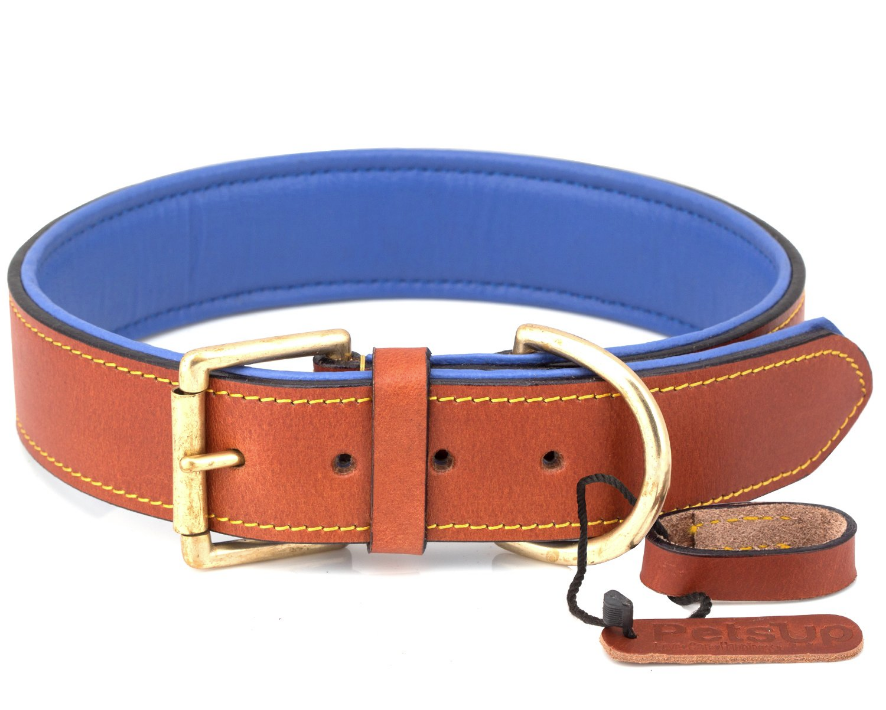
Flat Collars - the most popular of all dog collars, a flat collar is perfect for a well-trained dog that doesn’t pull or lunge on leash. It is also functional, as it gives you a place to hang your dog’s ID tag, as well as their rabies and vaccination tags. Buy a flat collar for a puppy and use when you’re training them. Remember: positive reinforcement (praise and treats) is the best way to train your dog. Not ideal for bracyphallacic dogs, such as pugs and bulldogs.
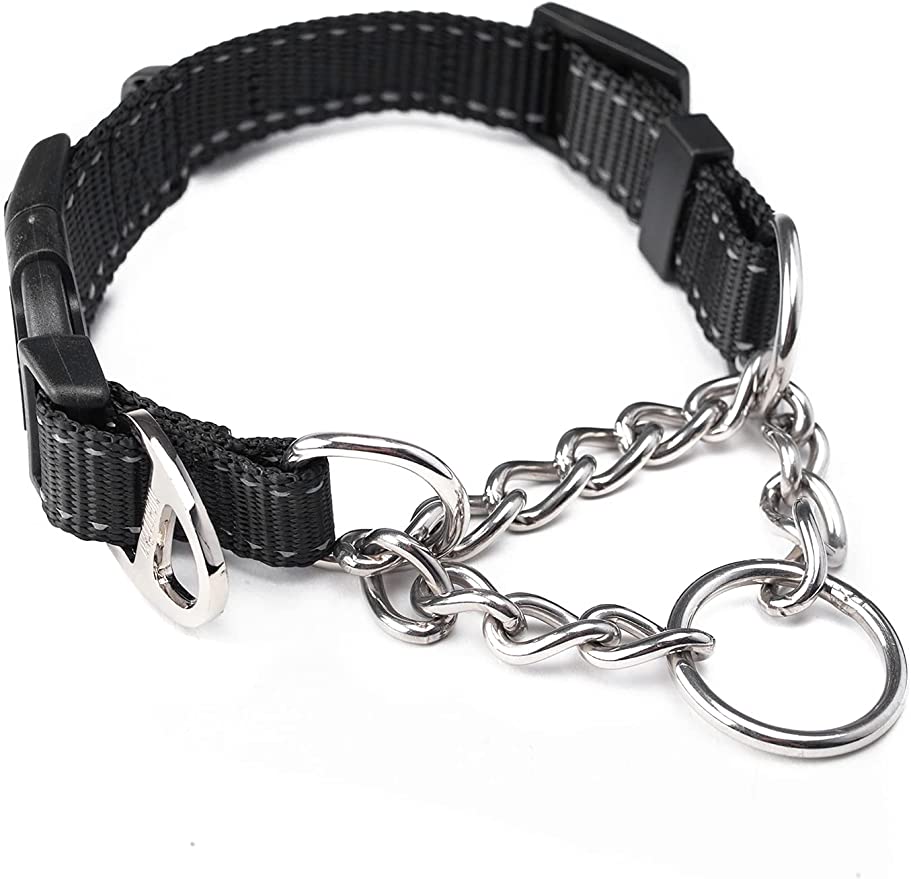
Martingale Collars - also known as ‘limited slip’ or ‘no slip’ or ‘safety collars’, these are designed for dogs whose necks are wider than the widest part of their heads (think: greyhound). Available in different designs, the Martingale Collar slips over the head and tightens with tension, when you or your dog pulls on the leash and is great for leash training.
A Martingale Collar is also a safer choice than a flat collar as it prevents your dog from slipping out of his or her collar. Not to be used on a dog who is an habitual puller on leash, the Martingale Collar is ideal for sight hounds, including the Greyhound, Whippet, Saluki, Italian Greyhound, Borzoi, Afghan Hound, Scottish Deerhound and Irish Wolfhound.
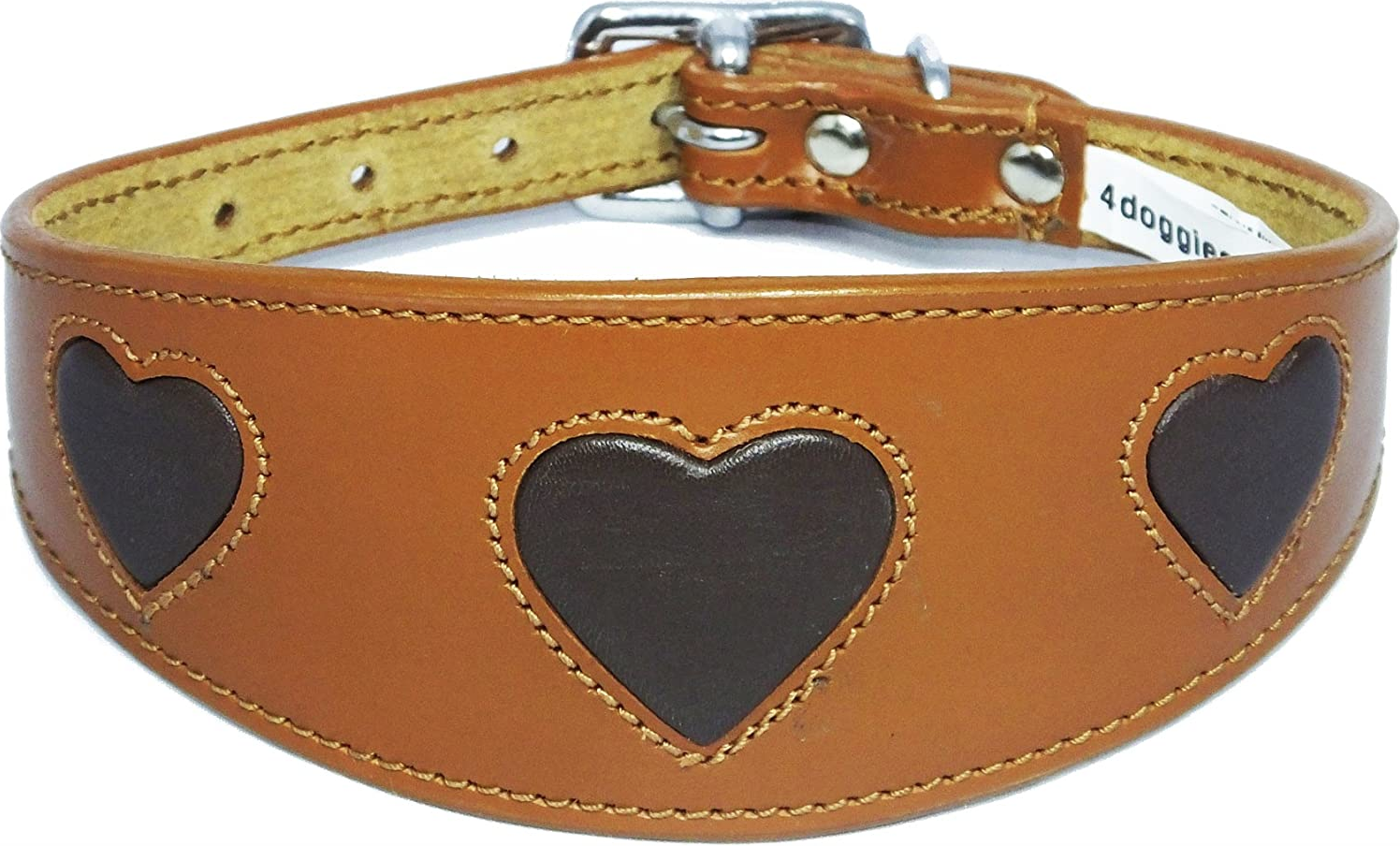
Lurcher Collars - most commonly used on sight hounds for coursing, running and racing greyhounds, the lurcher collar is a wider-than-normal collar which tapers at the ends. This gives support to the back of the hound’s neck without putting too much pressure on their windpipe when they are straining on the leash after a hare or rabbit.
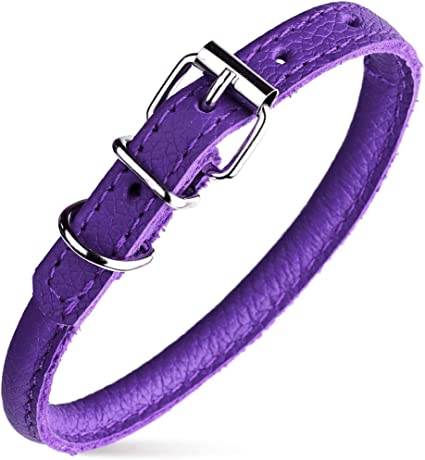
Rolled Collars - is a great collar for everyday wear as it won’t flatten or matt your dog’s fur like a flat collar does. More of an aesthetic collar than a working collar, rolled collars can put too much pressure on the trachea to make them safe for regular walking. However as a means of identification and vaccination, rolled collars are ideal for long-haired, shaggy or fluffy dogs.
When purchasing a dog collar, check for the correct sizing by leaving enough room to slip either one finger width for small dogs and a two finger width for larger dogs.
A dog collar will give you more control over your dog, but too much pulling may lead to neck, throat and back problems.
When it comes to choke chains, slip collars and prong collars, the American Kennel Club gives this warning: “Avoid so-called corrective collars, like choke collars and prong collars, which can cause neck injury, pain and even strangulation.”
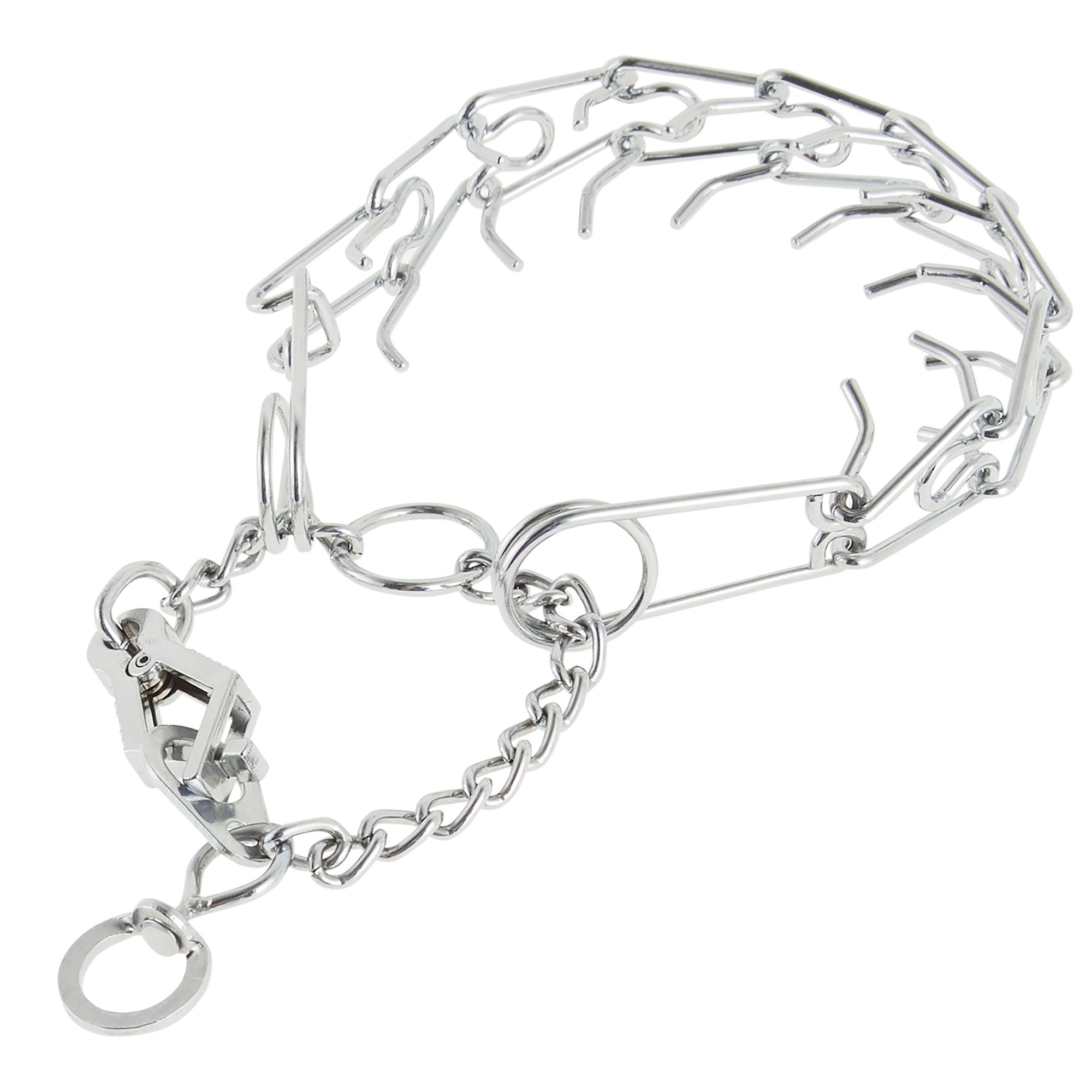
Choke chains and prong collars are banned in many countries, including Canada. Tip: the clue is in the name.