How Do Cats Hear Music?
February 21, 2023
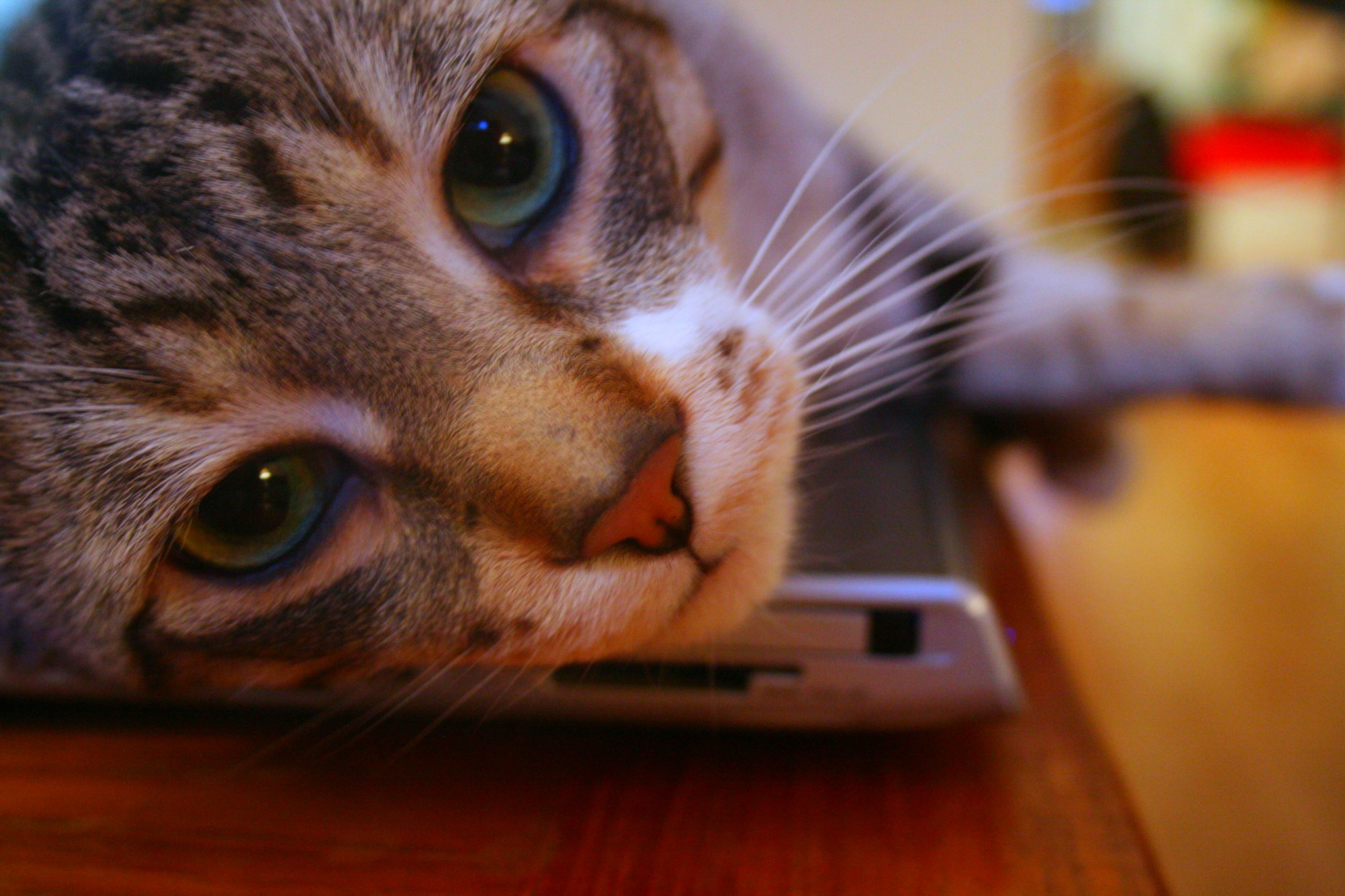
Just because your cat cuddles up to you when you’re listening to music doesn’t mean they necessarily like the sounds emanating from the speakers. Some cats aren’t afraid to show their disapproval with loud yowls of protest, while others simply run from the room to escape the human racket.
The truth is, scientists now know that different species respond differently to music according to their tonal spectrum and the complexity of their hearing system. Not all of them like human music.
Musical sounds that resonate with us humans consist of tones that are familiar to our ears and fall within our range of pitch. For cats, this means that music with a meowy mix of sounds resonates for them. When we’re in tune with the music, whether we’re human or animal, it makes us feel good.
Scientists want to make sure that the music they play to animals living in captivity, in zoos, shelters and research facilities, is actually beneficial. They believe human music is not the answer, but species-specific music is.
In 2009, scientists from the University of Wisconsin-Madison reported in a study of cotton-top tamarin monkeys that species-specific music, created just for them, had a calming effect on the monkeys.
Lead author of the study and emeritus professor of psychology, Charles Snowdon, together with University of Maryland composer David Teie told WISC News:
“The same features that are effective in inducing and communicating emotional states in human music might also apply to other species.” These features include pitch, tempo and timbre.
The same research team went on to test this theory on cats in 2015. First they composed species-specific music to see what kind of sounds made cats stand up and take notice.
Snowdon reported in a press release: “We are not actually replicating cat sounds, we are trying to create music with a pitch and tempo that appeals to cats.”
To make music that appeals to cats, Snowdon and his team evaluated different musical sounds “in the context of the animal’s sensory system” and behaviour. For instance, they used purring sounds, suckling sounds and different meowing tones. It’s important to get the pitch just right. Cats vocalize at one octave higher than humans. Tempo is also important. In one sample they matched the tempo of the music to the rhythm of purring.
On this study, two classical tunes were played to a group of 47 domestic cats – Gabriel Fauré’s Elegie and Bach’s Air on a G String – and two cat-specific tunes (created by University of Maryland composer David Teie).
As the music played, researchers rated the cats’ behaviour based on:
- Purring
- Walking toward the speaker and rubbing against it
- Hissing
- Arching their backs and erecting their fur
The cats responded quicker to the cat-specific music than they did the human music. After about 110 seconds, the cats would walk up to the speakers and rub themselves against it. While they ignored the classical music for about 171 seconds before eliciting any kind of response.
Snowdon hopes these findings will help dispel some of the confusion surrounding music and the effect it has on animals. There are many contradictory studies out there, including one that proved animals don’t like music at all.
But we all know that’s not true. How many of us have pets that rub up against us when we play guitar or rest against the speakers to get closer to the music and feel the beat. Not to mention the number of pet birds on YouTube seen bopping to the rhythm of human music.
Snowdon believes otherwise: “There is a lot of silly stuff going on. We don’t yet know, for most cases, what the effects of music are on animals.”
Animals hear a different range of frequencies, depending on the species and their vocalization. For example, rats in Japan who were played Mozart ignored any frequency below 4,000 hertz. Human music is irrelevant to them.
There is a misconception that classical music will be calming, when it could have the opposite effect to an animal and instead invigorate them or make them angry or sound ominous.
So the question is, what kind of benefit is the music we play to animals in captivity and is it therapeutic?
Snowdon hopes his species-specific music will prove more beneficial to animals and that others will follow suit. Or maybe it’s just classical music that our pets dislike. Not even humans all like classical music. It’s subjective and all a matter of personal taste. Perhaps the same can be said for our dogs and cats and birds.