A Puppy Is For Life, Not Just For Christmas
January 2, 2016
by Natalie Secretan
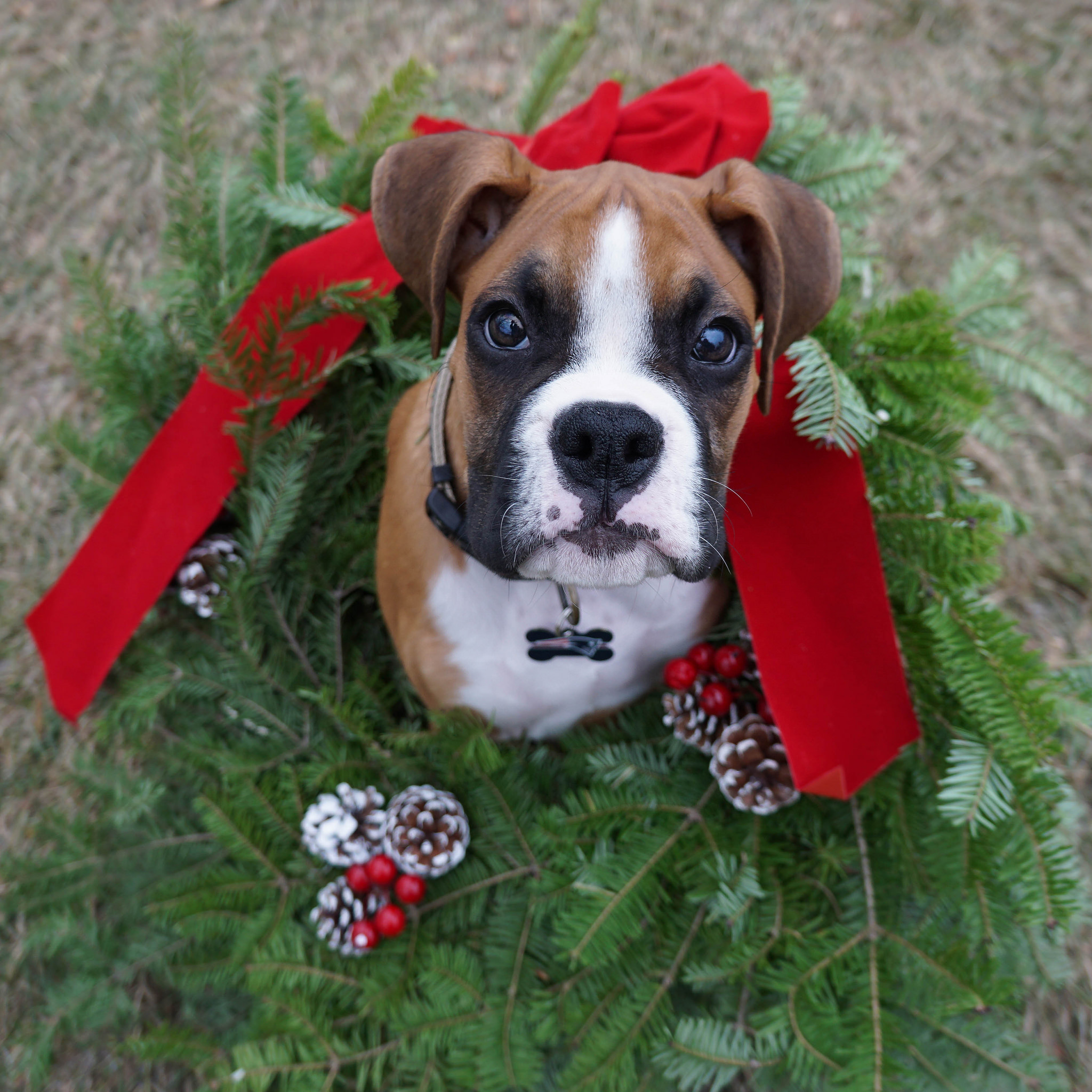
So you got a new puppy for Christmas. What happens in the next six months will shape your dog’s behaviour. So let’s take a look at some tips you need to know to get you started in the right direction.
Puppies are just like kids; they can get into all kinds of mischief, especially if left unsupervised. Just like kids, they need guidance and training to teach them right from wrong. And just like kids, they need praise and encouragement to develop confidence.
Before you even consider a puppy, take a trip to your local library and read up on dog behaviour, dog breeds, and dog training. If you’re rolling your eyes already, then maybe a puppy isn’t for you. Or maybe, your Christmas puppy was a complete surprise, and you’re totally unprepared!
Here’s where I take a leaf out of Cesar Millan’s book, and tell you to keep calm but assertive. You want your dog to respect you and grow up to trust you. If you raise your voice or lose control, your dog will become fearful, and fearful dogs often run away, and some will exert dominance and snap back. So be careful of your body language and ask yourself, “Would I treat a child like that?”
I remember when I brought my little 9-week old puppy home for the first time. Layla, my hyper hound, a Beagle x Springer Spaniel cross. She was so stubborn, so loud, so anxious, and very needy. But unbelievably cute! The first two weeks were exhausting and tearful, and I began to doubt whether I had the stamina to see it through. But once we developed a routine and stuck to it, everything began to fall into place.
So that’s the number one priority – develop a routine:
· Establish your puppy’s feeding times
· Time your puppy’s trips outside to relieve themselves around feeding times
· Use a crate for your puppy’s safe place, and sleeping spot
Getting your puppy into the habit of routine helps to establish boundaries and order. All dogs respond especially well to routine. So make sure your feeding times, trips outside, nap time, play time and training times are the same every day.
The next important thing to do is write down your command words, so everyone in the family is on the same page. What is the command for when they jump up? Is it, get down? Get off? Or stay down? All three of these commands sound different to a dog. If everyone in your household uses the same command words, your dog will learn them better and quicker.
It’s really helpful if you buy yourself an easy-to-follow obedience training guide, so you can refer to it again and again. I’m particularly fond of Dr. Bruce Fogle, a Canadian veterinary doctor, who does a lot of work and research out of Guelph University. He has a number of books available that are fun to read and easy to understand.
You’ll want to teach your dog the basic commands of sit, come, stay and lie down. These obedience commands are the first steps in training your dog to listen to you. Believe me! If you can train your dog to listen to you at the right time amidst chaos and distractions, then you deserve a gold star.
Start with training your dog to recognize his or her name. Your dog’s quick recall time could mean the difference between safety and danger. So work on recall as your number one obedience command. A game of fetch is a great way to practice. It’s also great exercise for your dog and a lot of fun. Practice obedience training inside the house first, away from any distractions. Remember, puppies have short attention spans, so 10 minutes at a time is probably enough for starters.
These are just a few pointers to get you started. One thing to remember is that just like kids, dogs treat each day as a new learning experience. Sometimes they need to be told or shown again and again, until it sinks in. So please be patient and above all, consistent.
Photo credit: Wiggle Butts Pet Photography
Photo credit Website: www.wigglebuttsphoto.com
Photo credit Facebook: www.facebook.com/wigglebuttsphoto